

A beautiful garden doesn’t have to mean endless hours of weeding, pruning, watering and mowing. For many homeowners, the dream is a garden that looks considered and stylish throughout the year, but doesn’t demand constant attention to keep it that way.
The good news is that a low-maintenance garden can still be full of character, colour and beautiful planting. The key is thoughtful garden design. By choosing the right plants, materials and layout from the beginning, you can create an outdoor space that works with your lifestyle rather than creating more work for you.
Start with the Right Garden Design
A genuinely low-maintenance garden begins with good design. Before choosing plants or materials, think about how you want to use the space and how much time you realistically want to spend maintaining it.
A well-designed garden can reduce unnecessary work by creating clear planting areas, practical pathways and functional spaces that are easy to access. It can also help prevent problems such as overcrowded planting, difficult-to-reach borders and lawns that are awkward to maintain.
This doesn’t mean your garden needs to be minimalist. A carefully considered design can still include abundant planting, beautiful borders, mature-looking trees and plenty of personality.

Choose Plants That Suit Your Garden
One of the biggest mistakes when creating a low-maintenance garden is choosing plants based purely on appearance.
Instead, consider what will thrive naturally in your particular garden. Think about the amount of sunlight, soil type, drainage and exposure to wind. Plants that are suited to their environment are generally healthier and require less intervention.
Perennials, shrubs and ornamental grasses can be particularly useful in a low-maintenance planting scheme. Once established, many require far less attention than seasonal bedding plants, while still providing structure, texture and colour.
Evergreen plants can also provide year-round interest, reducing the need to constantly replace planting to keep the garden looking attractive during the winter months.
The aim isn’t to fill your garden with plants that require no care whatsoever. Rather, it is to choose plants that reward you with plenty of beauty without demanding constant attention.
Create Structure with Hard Landscaping
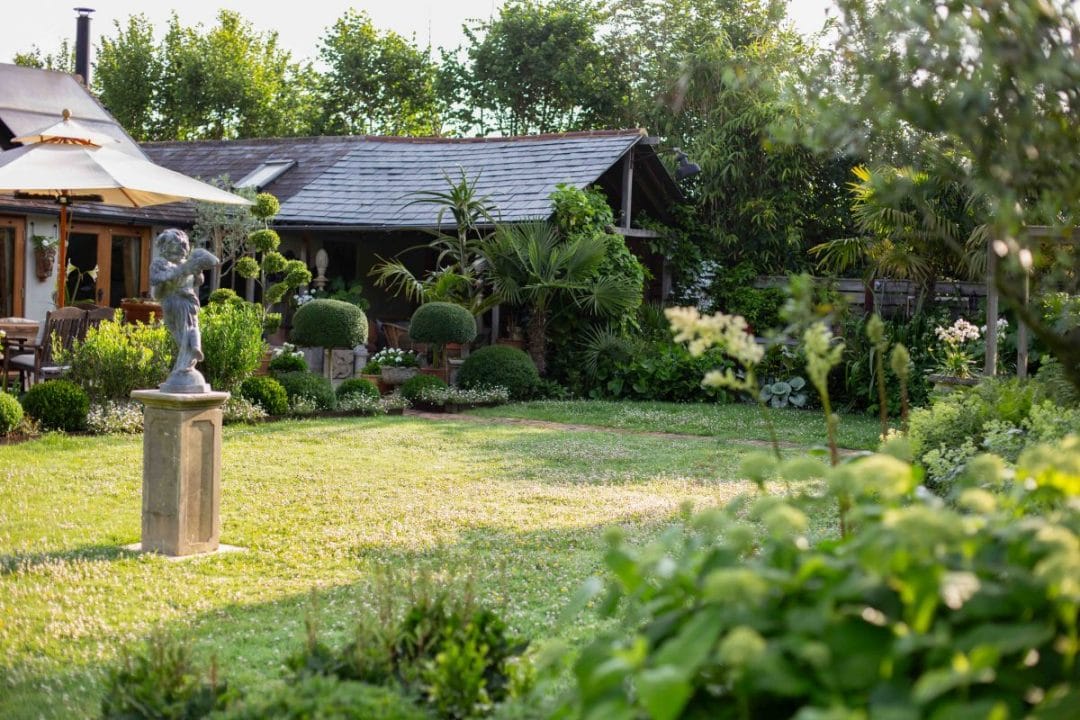
Hard landscaping can play an important role in reducing garden maintenance while adding style.
Patios, terraces, pathways, walls, steps and other permanent features provide structure throughout the year and can reduce the amount of space that needs regular attention.
For example, replacing a large area of lawn with a beautifully designed terrace or a series of planted borders can make a garden feel more purposeful while reducing mowing.
However, low maintenance doesn’t mean covering everything in paving. The most successful gardens balance hard landscaping with generous planting, creating a space that feels green, natural and inviting.
Think About Your Lawn
For many gardens, the lawn is one of the biggest maintenance commitments.
Regular mowing, edging, feeding, aerating and watering can quickly add up, particularly if you have a large lawn. If you love having a lawn, there’s no reason to remove it completely. Instead, consider whether you need as much lawn as you currently have.
A smaller, well-designed lawn can provide an attractive area for relaxing or entertaining while significantly reducing maintenance.
Alternatively, you could introduce informal planting, ground cover or other features into areas where grass currently struggles to thrive.
Make Your Planting Work Harder
Good planting design is one of the best ways to create a garden that feels luxurious without requiring constant upkeep.
Instead of scattering lots of individual plants throughout your borders, consider planting in larger groups or repeating key species. This creates visual cohesion and gives the garden a more sophisticated, intentional appearance.
Repeating plants, colours and textures throughout the garden can also make the space feel larger and more connected.
Layering is another useful technique. Combining trees, shrubs, perennials and ground-cover plants creates different levels of interest while helping to fill gaps in the planting. Once established, dense planting can also help suppress weeds by leaving less bare soil exposed.
Don’t Forget the Soil
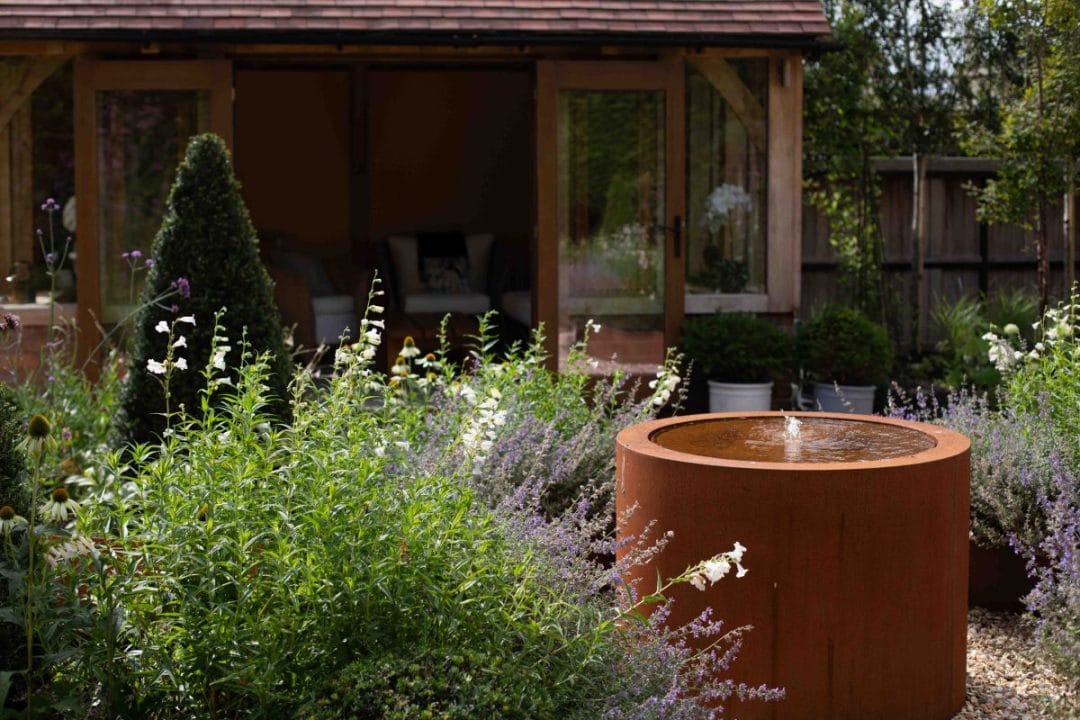
Healthy soil is often overlooked when thinking about garden maintenance, but it can make a significant difference.
Plants growing in healthy, well-managed soil are better equipped to establish strong root systems and cope with environmental stresses. Adding organic matter where appropriate and improving soil structure can give plants a much stronger foundation.
Mulching your borders can also help retain moisture, suppress weeds and improve soil health over time.
A well-mulched, densely planted border can look beautifully finished while reducing some of the repetitive maintenance associated with bare soil.
Design for the Future
A low-maintenance garden isn’t necessarily low-maintenance from day one.
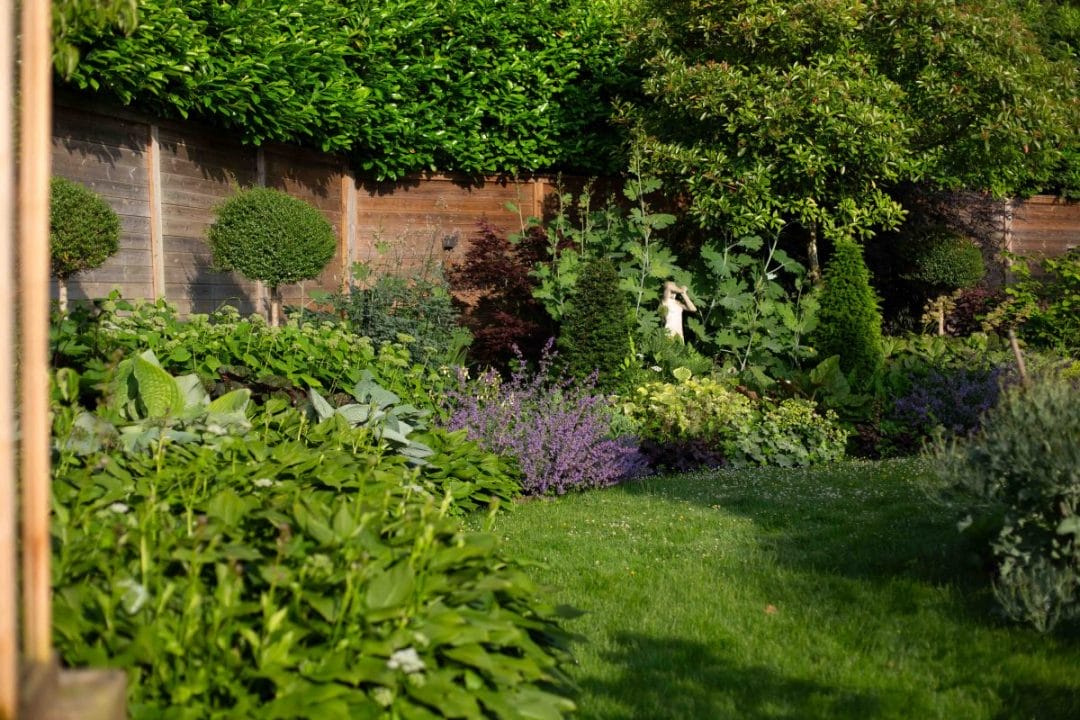
Newly planted gardens require watering, establishment care and some attention while plants settle into their surroundings. However, a good garden design should consider what the space will look like in five or ten years, rather than just how it looks immediately after planting.
Choosing plants with their eventual size in mind is particularly important. Planting something that will eventually become too large for its space can create unnecessary pruning and maintenance later.
Good design considers how plants will grow, mature and interact with one another over time.
Remember That Low Maintenance Isn’t No Maintenance
Even the most carefully designed garden will benefit from regular care.
The difference is that a well-designed low-maintenance garden should require less intensive and more manageable maintenance, rather than constant intervention.
Regular seasonal maintenance can actually help prevent larger jobs from developing. Pruning plants correctly, managing weeds early, monitoring plant health and keeping borders tidy can all help your garden remain healthy and attractive.
For homeowners who don’t have the time or inclination to maintain their garden themselves, professional garden maintenance can take care of these tasks while ensuring the original design continues to look its best.
A Low-Maintenance Garden Can Still Feel Luxurious
The idea that a low-maintenance garden needs to be plain, sparse or dominated by paving is a thing of the past.
With thoughtful design and the right planting, you can create a garden that feels beautiful, abundant and full of personality, while making it considerably easier to look after.
The secret is not simply choosing plants that require less care. It is looking at the garden as a whole — its layout, planting, materials, soil, lawn and long-term growth — and designing each element to work together.
At Verdis Horticultural, we believe a garden should enhance your life, not add to your list of chores. As a family-run, boutique garden design and maintenance company, we create considered outdoor spaces that are both beautiful and practical, with planting and maintenance requirements carefully considered from the outset.
Whether you’re looking to redesign an existing garden or simply make your current space easier to manage, thoughtful garden design can help you achieve the balance between style, functionality and manageable maintenance.
READ MORE